Genre Five: Historical Novels
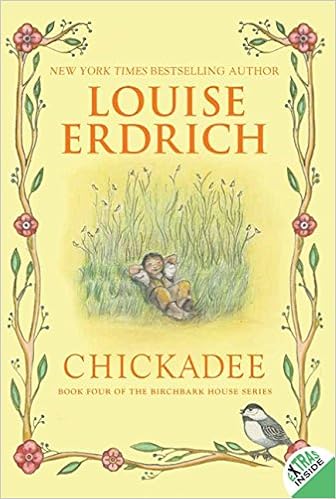
Erdich, Louis. Chickadee. New York: HarperCollins, 2012. ISBN 9780060577926
Plot Summary:
Chickadee is living with his Native American family and is kidnapped by two neighbor boys. He is set off on a scary journey to unknown areas of the world. His mother and twin brother are scared and set off to find him.
Chickadee is living with his Native American family and is kidnapped by two neighbor boys. He is set off on a scary journey to unknown areas of the world. His mother and twin brother are scared and set off to find him.
Critical Analysis:
Erdrich has created two very believable characters. She is able to show the brotherly and twin connection between Chickadee and his brother. She exemplifies this in the beginning by having them beg to tell the story of how they were born. "Omaykayas looked down at him and smiled wearily. She had told this story a hundred times, and Chickadee had told it a hundred times more." On that same page is a beautiful pencil drawing of the two boys showing their Native American heritage with the long braids and facial features. She is also able to show the anguish a mother and father go through when they have lost their child. "Animikiins climbed to the top of the bank. His face was still. He scanned the horizon to all sides...He prayed to the spirits, the aadizookaanag. Please help us find Chickadee."
The plot is realistic and true to the time period. It helps paint the not so pretty picture of what it was like for Native American families and the Ojibwe religion at this time. Erdirch paints a scary story of when Animikiins is out hunting. "After he felt the chill leave his heart, and after he got used tot he fact that he would live, Animikiins remembered that his family was very hungry."
The plot is realistic and true to the time period. It helps paint the not so pretty picture of what it was like for Native American families and the Ojibwe religion at this time. Erdirch paints a scary story of when Animikiins is out hunting. "After he felt the chill leave his heart, and after he got used tot he fact that he would live, Animikiins remembered that his family was very hungry."
The reader can see that Erdich has done research on the Ojibwe tribe as she has a glossary of terms at the back of the book for reference. She also notes that this language was all oral and never written. She spells the words phonestically and apoligizes for any mistakes that might be there. She refers to a separate reference book for more information (A Consise Dictionary of Minnesota Ojibwe edited by John D Nicholas and Earl Nyolm).
This book will encourage you to do more research on Native Americans. I could not put it down!
This book will encourage you to do more research on Native Americans. I could not put it down!
Review Excerpts:
From Booklist: The mischievous celebration will move readers, and so will the anger and sadness. What is left unspoken is as powerful as the story told."
From The Horn Book: "Readers will absorb the history lesson almsto by osmosis; their full attention will be riveted on the story. Every detail anticipates readers' interest."
From ALA Booklist: "The focus moves to new generation. As always, the focus is on the way-of-life details as much as the adventure. Most affecting are the descriptions of Makoons' loneliness without his brother."
Connections:
Read other books in the Birchbark House Series by Louise Erdrich:
The Birchbark House
The game of Silence
The Porcupine Year
Have students develop a KWL chart. Have them work on it before, during, and after the story and discuss what they learned about Native Americans.
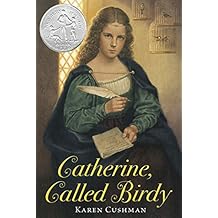
Cushman, Karen. Catherine, Called Birdy. New York: Clarion Books, 1994. ISBN 9780395681862
Plot Summary:
Birdy is a pre-teenager living in Medieval England. She does not want to get married and tries to outwit her family by getting rid of any potential suitor.
Critical Analysis:
Catherine is a typical 14 year old girl who is not happy with her teenage life. She is constantly trying to get out of being married off and thinks everyone else has a better life than her. Most teenage girls will be able to identify with this character trait. "I am frequently told not to spend so much time with the goat boy, so of course I seek him out whenever I can." This sounds like a typical teenager talking.
The plot of this story is that Catherine does not want to be married off. She want to be free and do and marry anyone she pleases. Throughout the story, historical accuracy is considered especially when they discuss making the halls smell better and talking of not being able to take baths. "But the bathing tub had been turned upside down and is being used as an extra table in the kitchen and I cannot have it until spring." This exemplifies what life was like in this time period in 1290. The author descriptively discusses the stench of the hallway and how they use "dried mint and thyme and gillyflowers over it."
Cushman's style is fluid and reflects the time period, but also encouraging one to make connections on their own. Arranged marriages still do exist in our world and I think many young women could relate to this issue.
Cushman adds to the authenticity of the story by adding in a critical Author's note at the back of the book. She has some suggestions for other reading material to learn about Medieval England.
Catherine is a typical 14 year old girl who is not happy with her teenage life. She is constantly trying to get out of being married off and thinks everyone else has a better life than her. Most teenage girls will be able to identify with this character trait. "I am frequently told not to spend so much time with the goat boy, so of course I seek him out whenever I can." This sounds like a typical teenager talking.
The plot of this story is that Catherine does not want to be married off. She want to be free and do and marry anyone she pleases. Throughout the story, historical accuracy is considered especially when they discuss making the halls smell better and talking of not being able to take baths. "But the bathing tub had been turned upside down and is being used as an extra table in the kitchen and I cannot have it until spring." This exemplifies what life was like in this time period in 1290. The author descriptively discusses the stench of the hallway and how they use "dried mint and thyme and gillyflowers over it."
Cushman's style is fluid and reflects the time period, but also encouraging one to make connections on their own. Arranged marriages still do exist in our world and I think many young women could relate to this issue.
Cushman adds to the authenticity of the story by adding in a critical Author's note at the back of the book. She has some suggestions for other reading material to learn about Medieval England.
Review Excerpts
Newberry Honor Book
ALA Best Book for Young Adults
IRA Teachers' Choice
From School Library Journal: "This unusual book provides an insider's look at the life of the Birdy, 14, the daughter of a minor English nobleman. The year is 1290 and the vehicle for storytelling is the girls' witty, irreverent diary....superb historical fiction."
From The Publisher: "This period has been presented for young people with such authenticity; the exotic details will intrigue readers while they relate more closely to Birdy's yen for independence and her sensibilities toward the downtrodden.
Newberry Honor Book
ALA Best Book for Young Adults
IRA Teachers' Choice
From School Library Journal: "This unusual book provides an insider's look at the life of the Birdy, 14, the daughter of a minor English nobleman. The year is 1290 and the vehicle for storytelling is the girls' witty, irreverent diary....superb historical fiction."
From The Publisher: "This period has been presented for young people with such authenticity; the exotic details will intrigue readers while they relate more closely to Birdy's yen for independence and her sensibilities toward the downtrodden.
Connections
Read other historical fiction books by Cushman
The Midwife's Apprentice
Matilda Bone
Will Sparrow's Road
Discuss the time period of 1290.
Make a storyboard of Catherine's story, including climax and resolution.
Read other historical fiction books by Cushman
The Midwife's Apprentice
Matilda Bone
Will Sparrow's Road
Discuss the time period of 1290.
Make a storyboard of Catherine's story, including climax and resolution.
Bibliography:
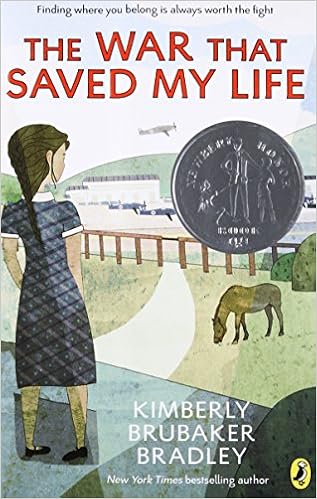
Bradley, Kimberly Brubaker. The War that Saved My life. New York: Puffin Books, 2015. ISBN 978-0147510488
Plot Summary:
Ada is an abused girl with a noticeable clubfoot. She and her brother, Jamie are sent off during World War II to live with Susan. Living with Susan changes their lives for the better.
Critical Analysis:
Bradley has created a very believable character in Ada. Though, some readers will not be able to understand the abuse from her mother, they will understand her pre-teen attitudes about life and certain things. When Bradley says, "Sometimes my mouth was faster than my brain."
The story has accurately described the time of World War II. It also has descriptively shown what it was like for the children of this time being placed in separate homes away from their families.
"England stood on the edge of another Great War then...and while I'd heard of Hitler--little bits that floated from the lane to my third-floor window." The reader can almost picture the time when they read, " we watched the world out the window--the iceman and his cart, the rag-and-bone man and his shaggy pony, the men coming home from the docks in the evenings, and the women hanging out wash and talking on the stoops."
"England stood on the edge of another Great War then...and while I'd heard of Hitler--little bits that floated from the lane to my third-floor window." The reader can almost picture the time when they read, " we watched the world out the window--the iceman and his cart, the rag-and-bone man and his shaggy pony, the men coming home from the docks in the evenings, and the women hanging out wash and talking on the stoops."
There is a detailed Q and A with the author about the authenticity of the hostility facts of the book. She first began studying about the children of World War II and what they went through when they were evacuating. As she was researching those facts, her story came to life. Most of her story was revised over and over again, but still keeping the historical facts in tact.
Bradley effortlessly has created a story that intertwines perfectly with abuse and what was happening during World War II. The reader will be rooting for Ada and Jamie throughout!
Bradley effortlessly has created a story that intertwines perfectly with abuse and what was happening during World War II. The reader will be rooting for Ada and Jamie throughout!
Review Excerpts:
NEWBERRY 2016 AWARD
Winner of the Josette Frank AWard
Wall Street Journal Best CHildren's Books of 2015
The Horn Book : "Involving, poignant, nuanced...this is a feel-good story, but an earned one....distinct and powerful in its own right."
Booklist: "The home-front realties of WWII as well as ADa's realistic anger and far, come to life in Bradley's affecting and austerely told story, and readers will cheer for steadfast Ada as she triumphs over despair."
Connections:
Read the sequel The War I Finally Won
Have students create a storyboard while they are reading the novel.
To include social studies, discuss World War II and the accuracy the book portrays of this time of the world.
Have students discuss feelings about disabilities and how we should treat one another.


Comments
Post a Comment